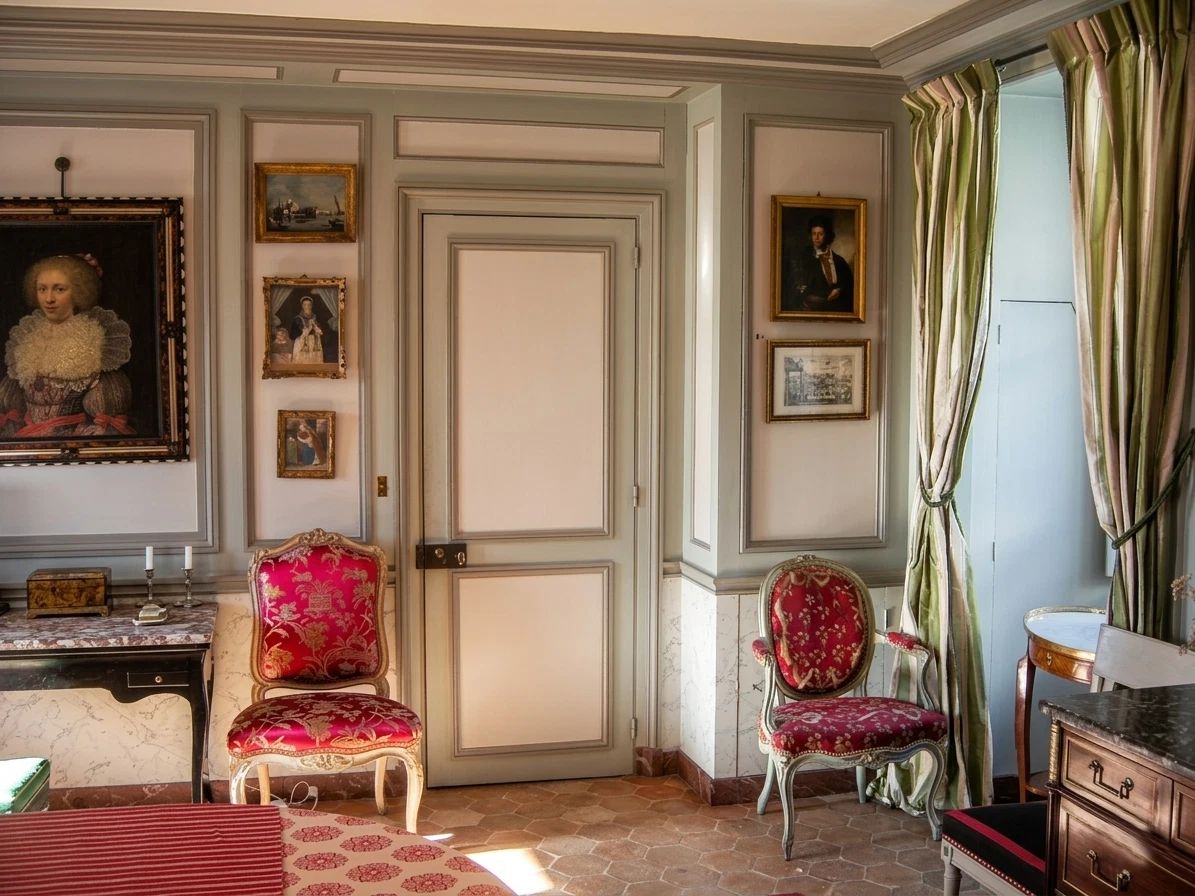
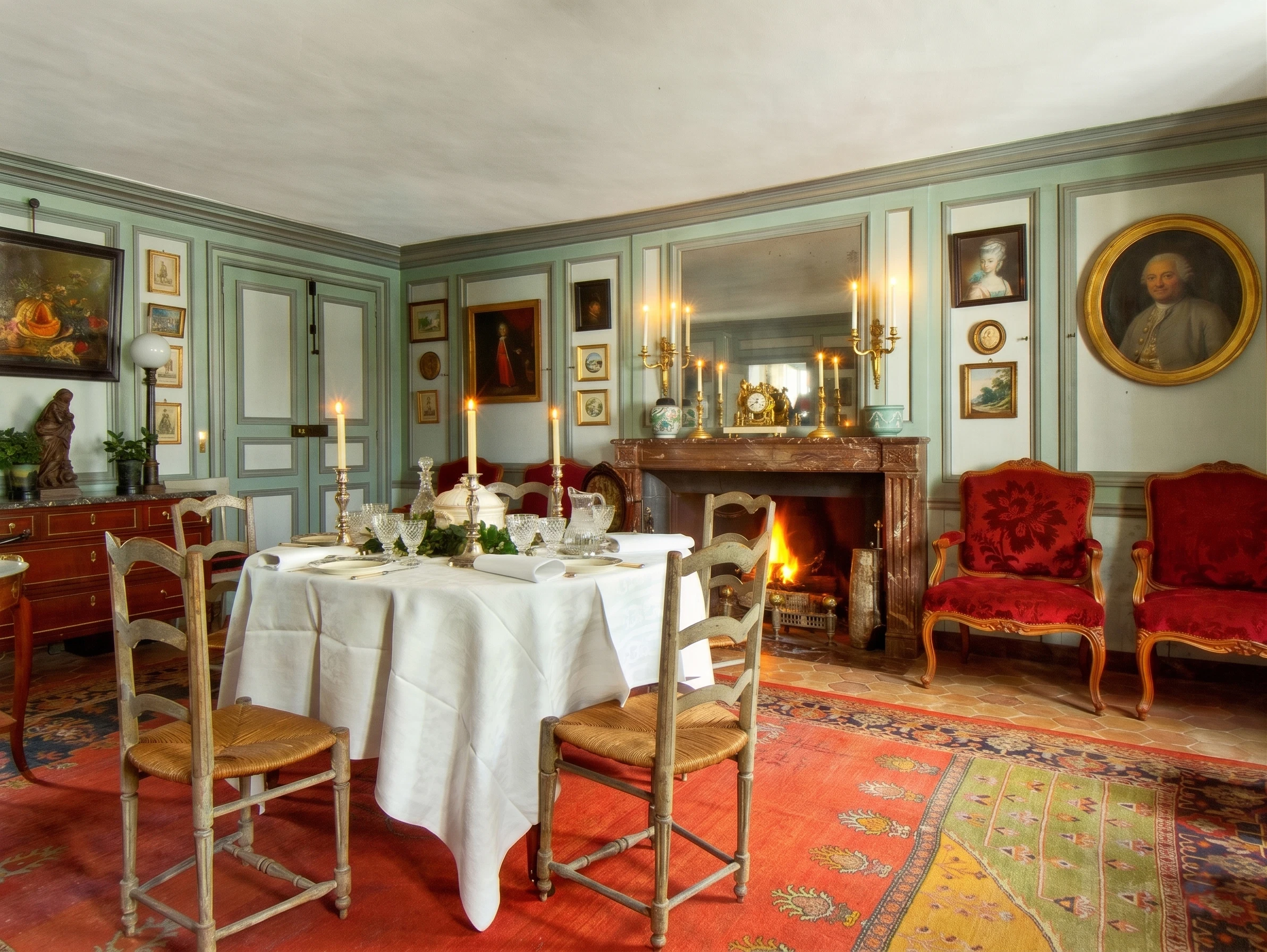
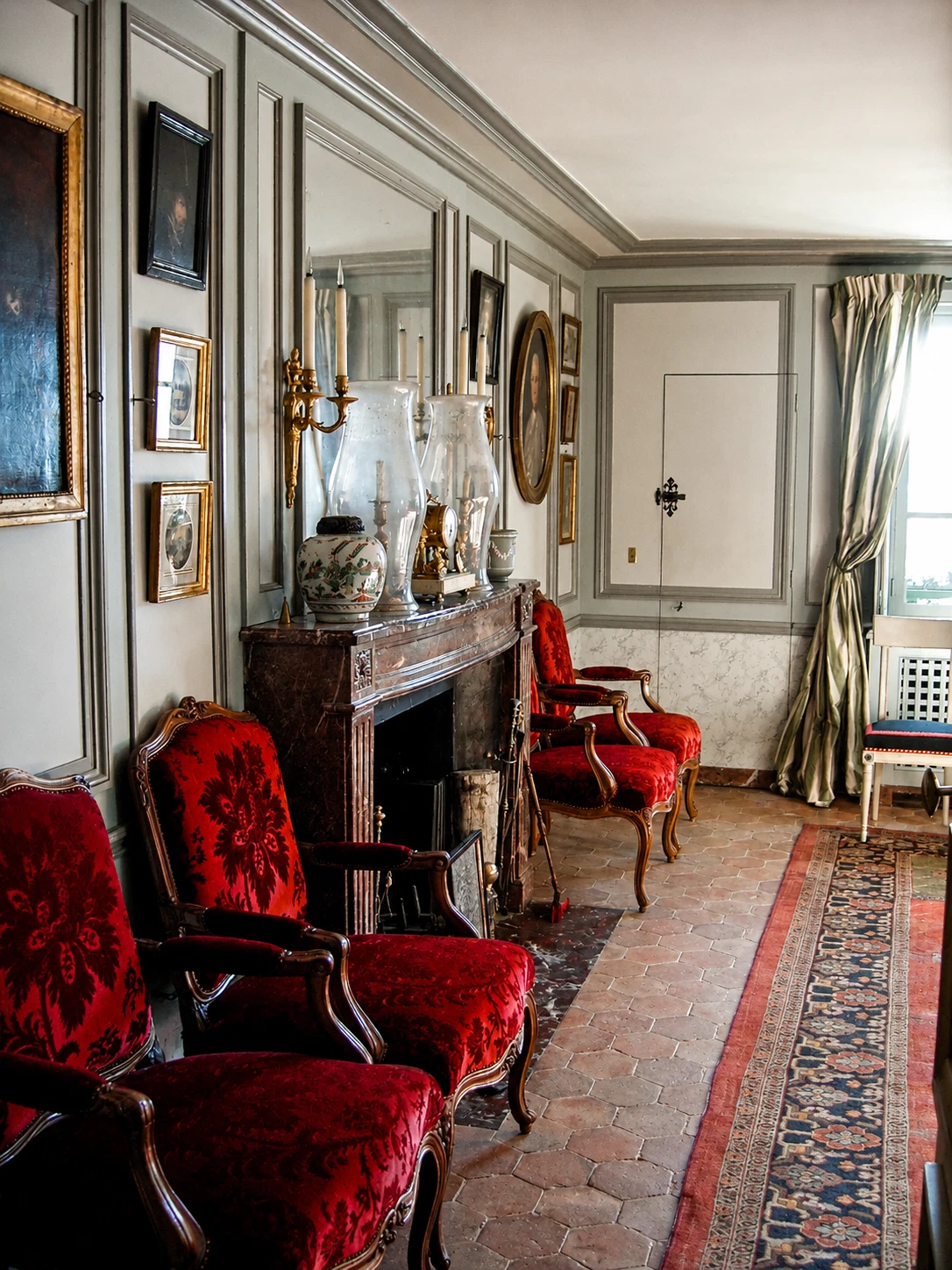
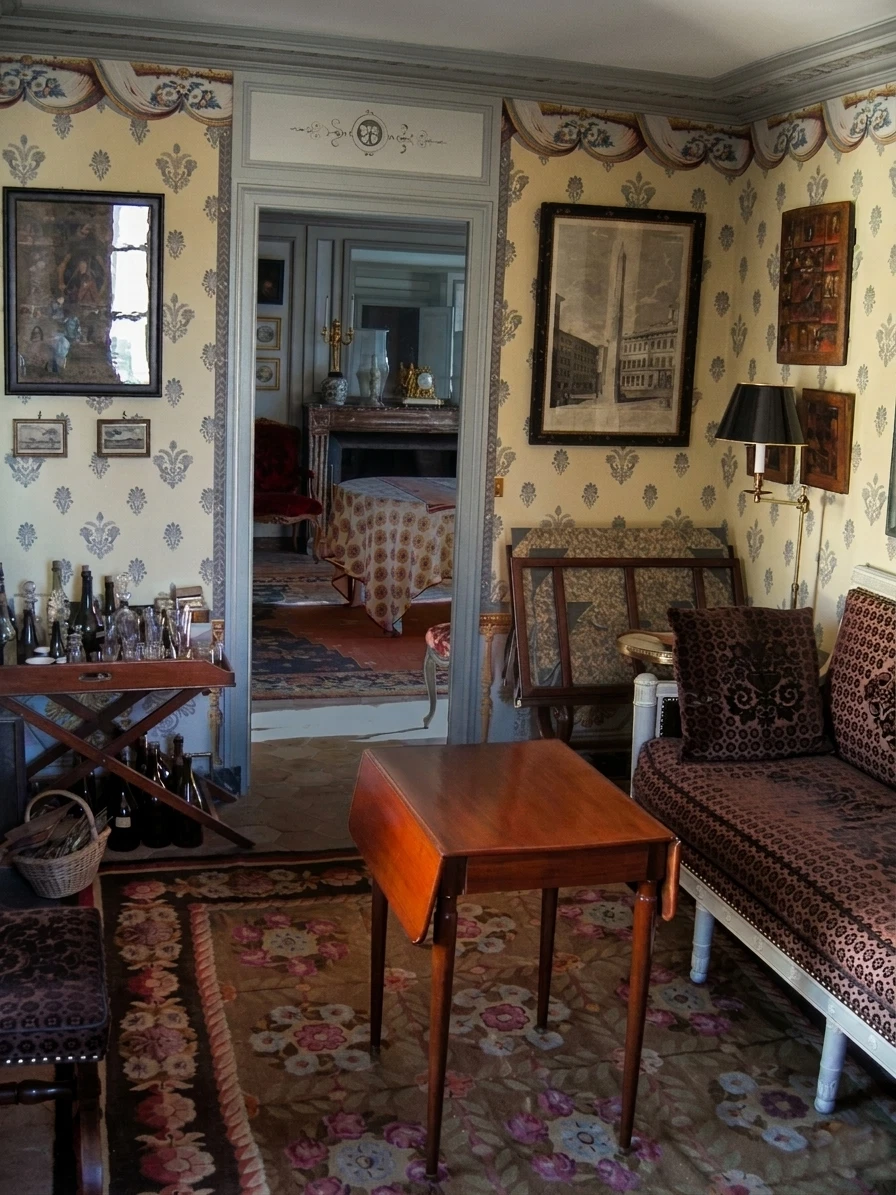
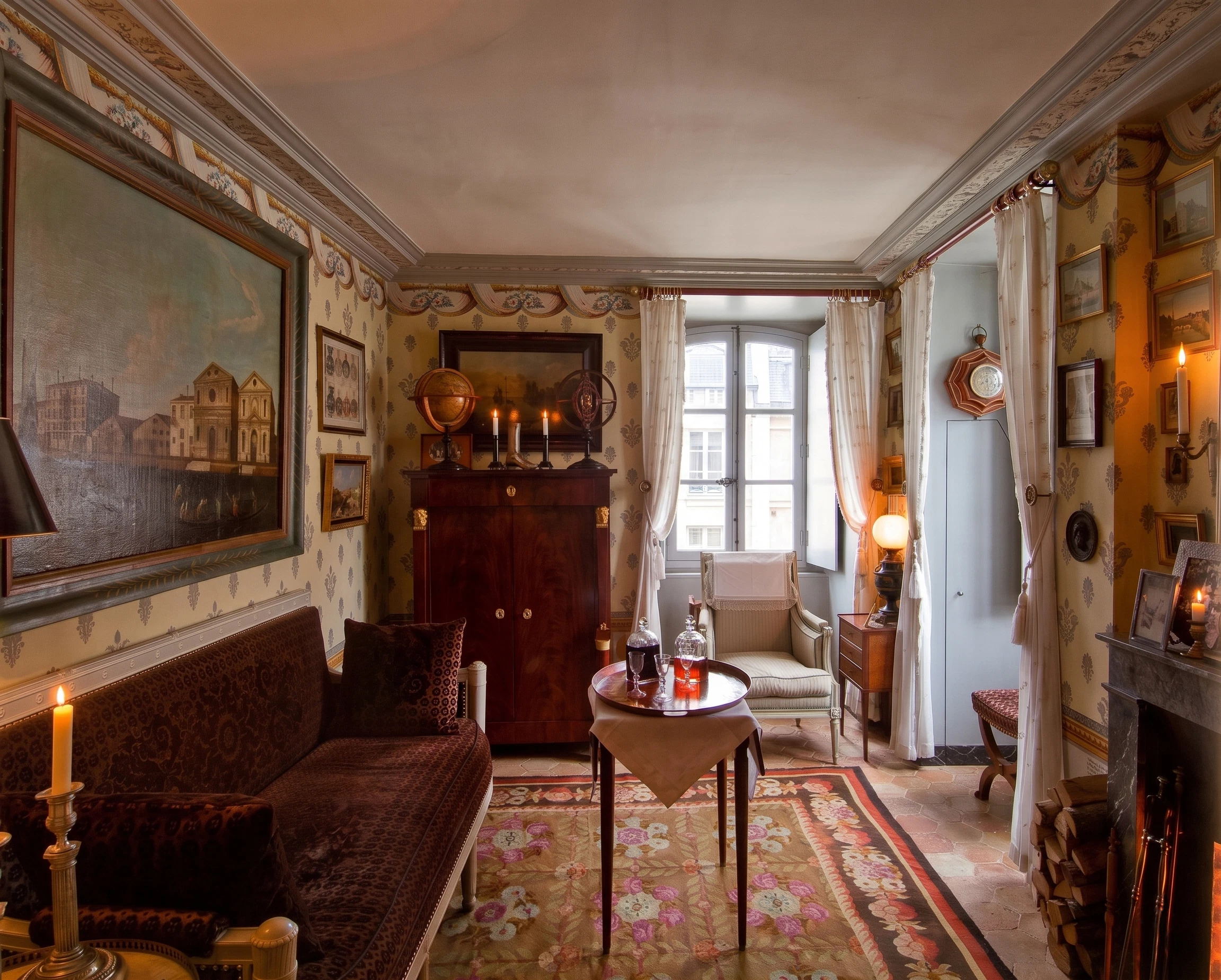
From the age of twenty, Philippe I. nurtured a profound ambition: to create a home that would allow his mind to escape into the world of the past. His collection began with furniture and vernacular objects once found in traditional kitchens. Later, Philippe and his wife assembled a collection of eighteenth- and early nineteenth-century tableware and decorative arts, enabling them to lay their table for formal dinners in the manner of a grand couvert(1).
Their ambition, however, extended beyond themselves. They wished to transport their guests into that same world — to unsettle their senses and immerse them in a feeling of unreality. Their undertaking was therefore far more ambitious than a simple historical reconstruction: it sought to give the collection life by restoring it to the fullness of its original purpose. The table settings required an architectural environment that would resonate with them in perfect harmony. Thus the apartment came into being.
The Birth of an Apartment
Or rather, it would be more accurate to speak of apartments, for there were several successive attempts. Yet Philippe I. never quite attained the sense of balance and authenticity he was seeking; he always felt that something was missing — a particular atmosphere.
The choice of location proved essential. The apartment was established within a building dating from before the nineteenth century, thereby avoiding too abrupt a contrast between the contemporary world outside and the historical atmosphere within. This decision immediately imposed a number of constraints upon the architect, Michel Pinet, relating to the building's proportions, structural configuration and the available budget.
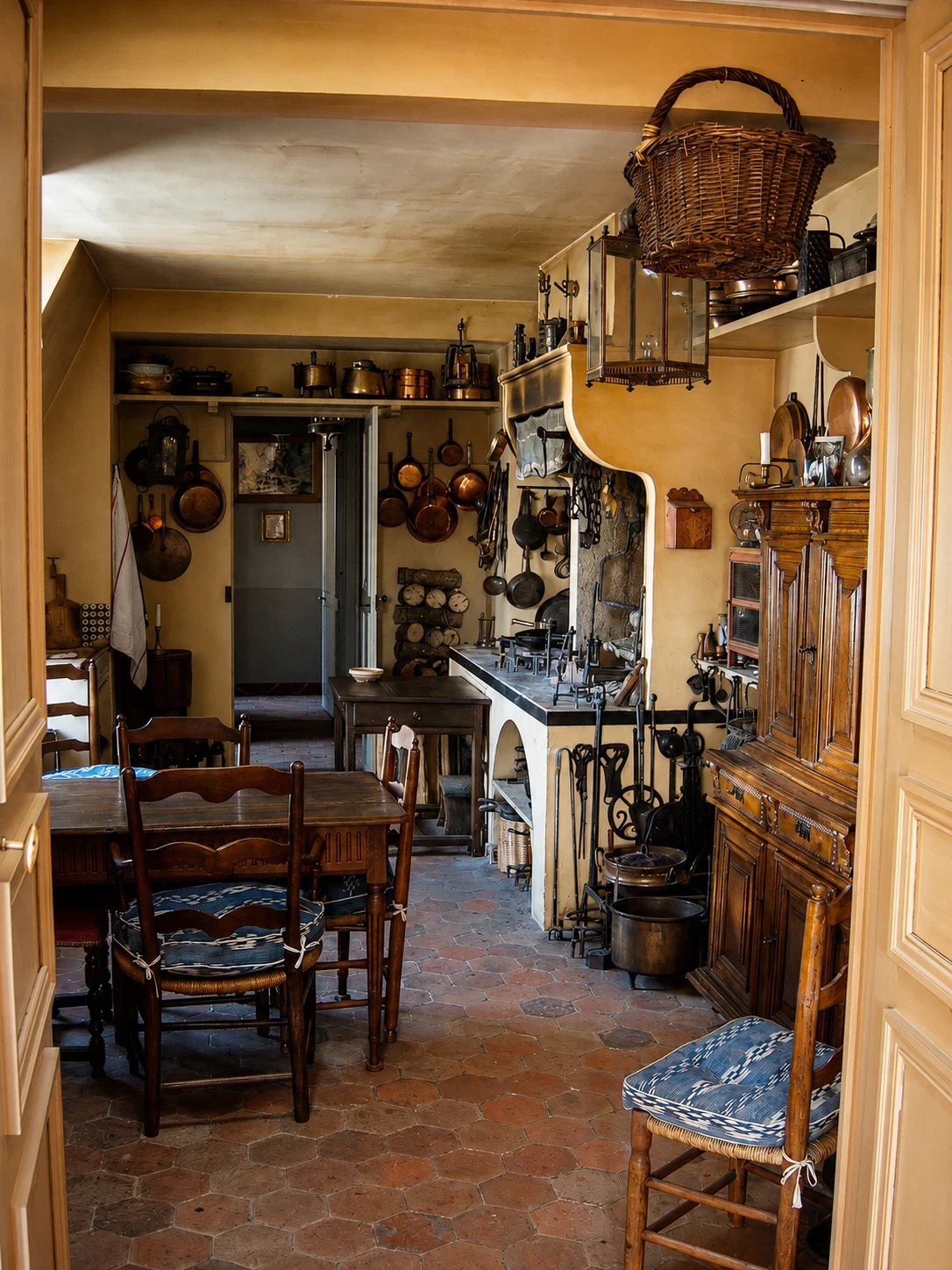
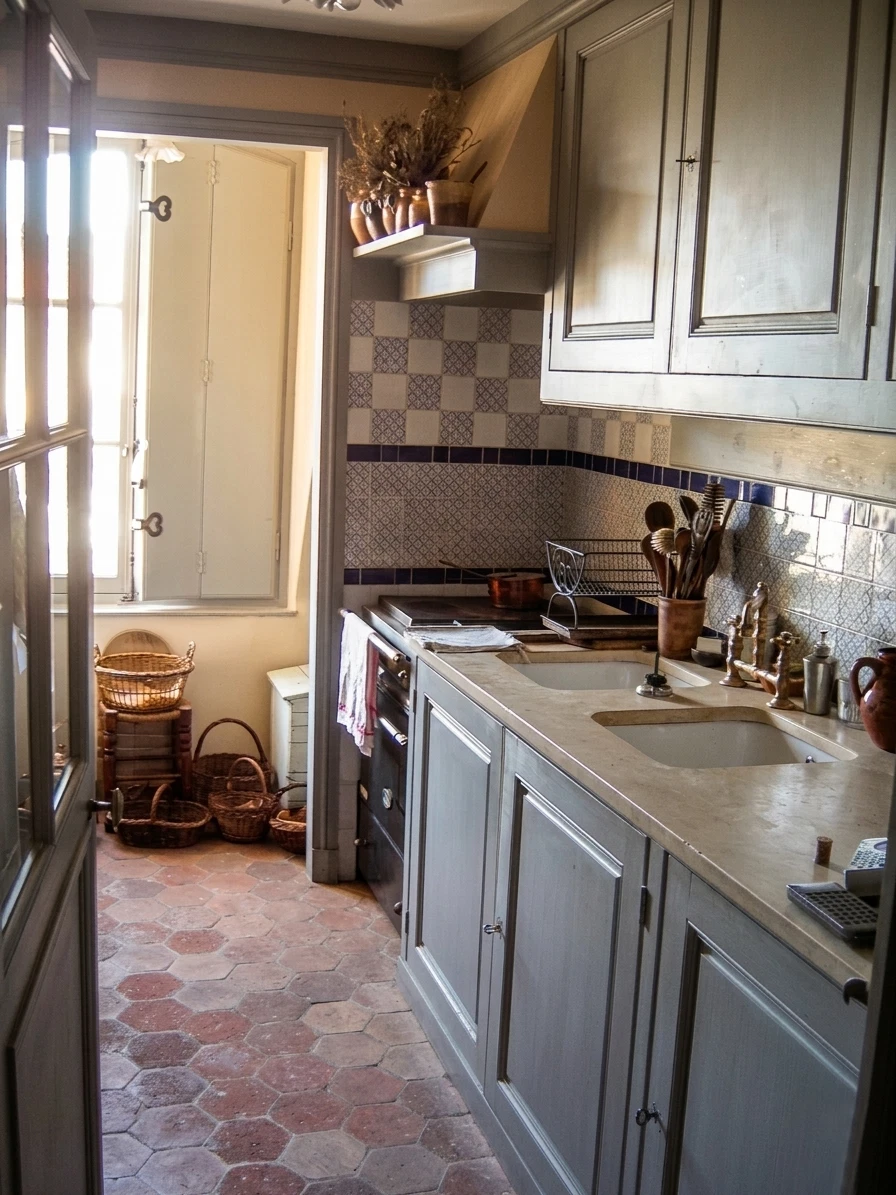
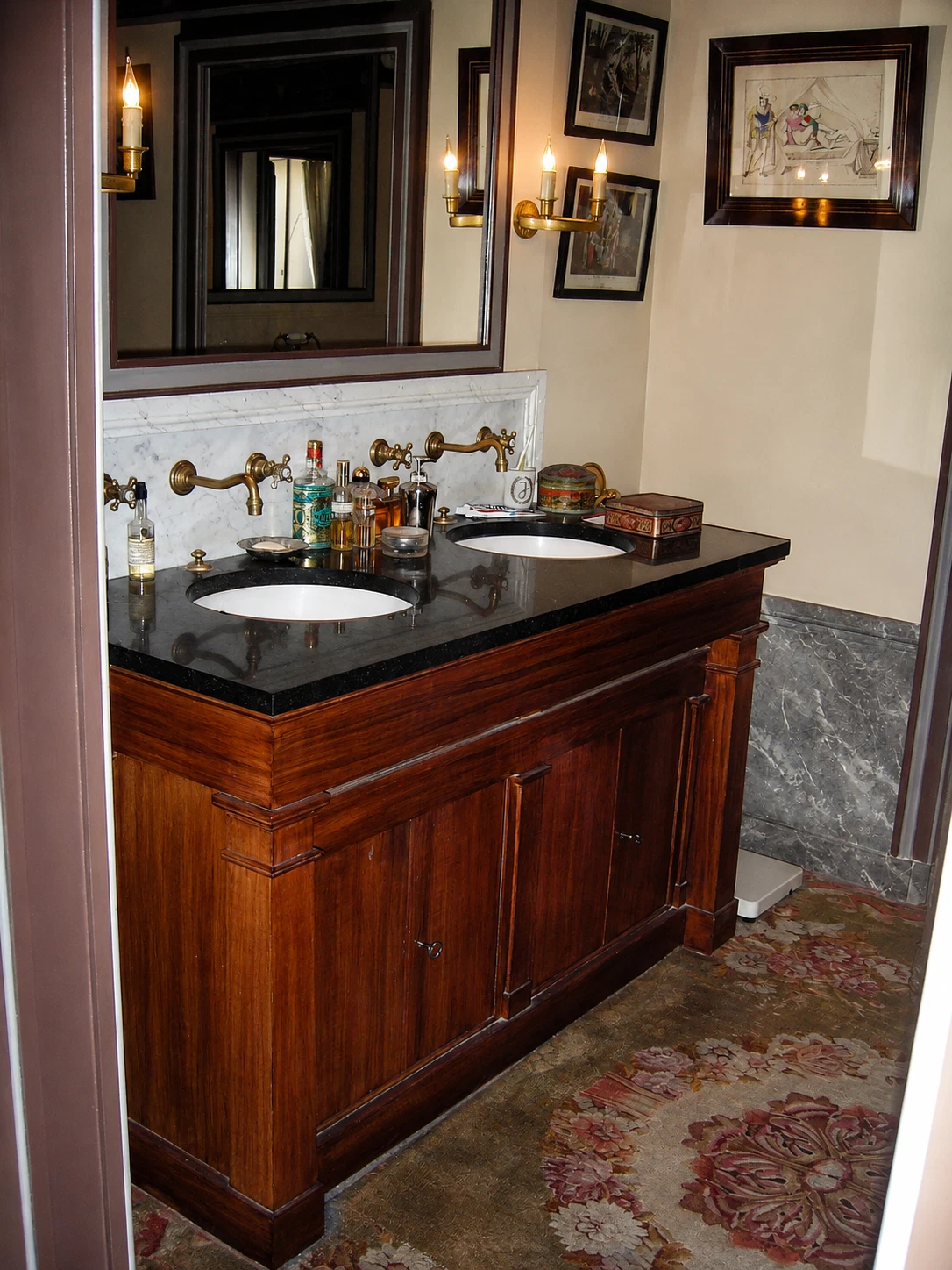
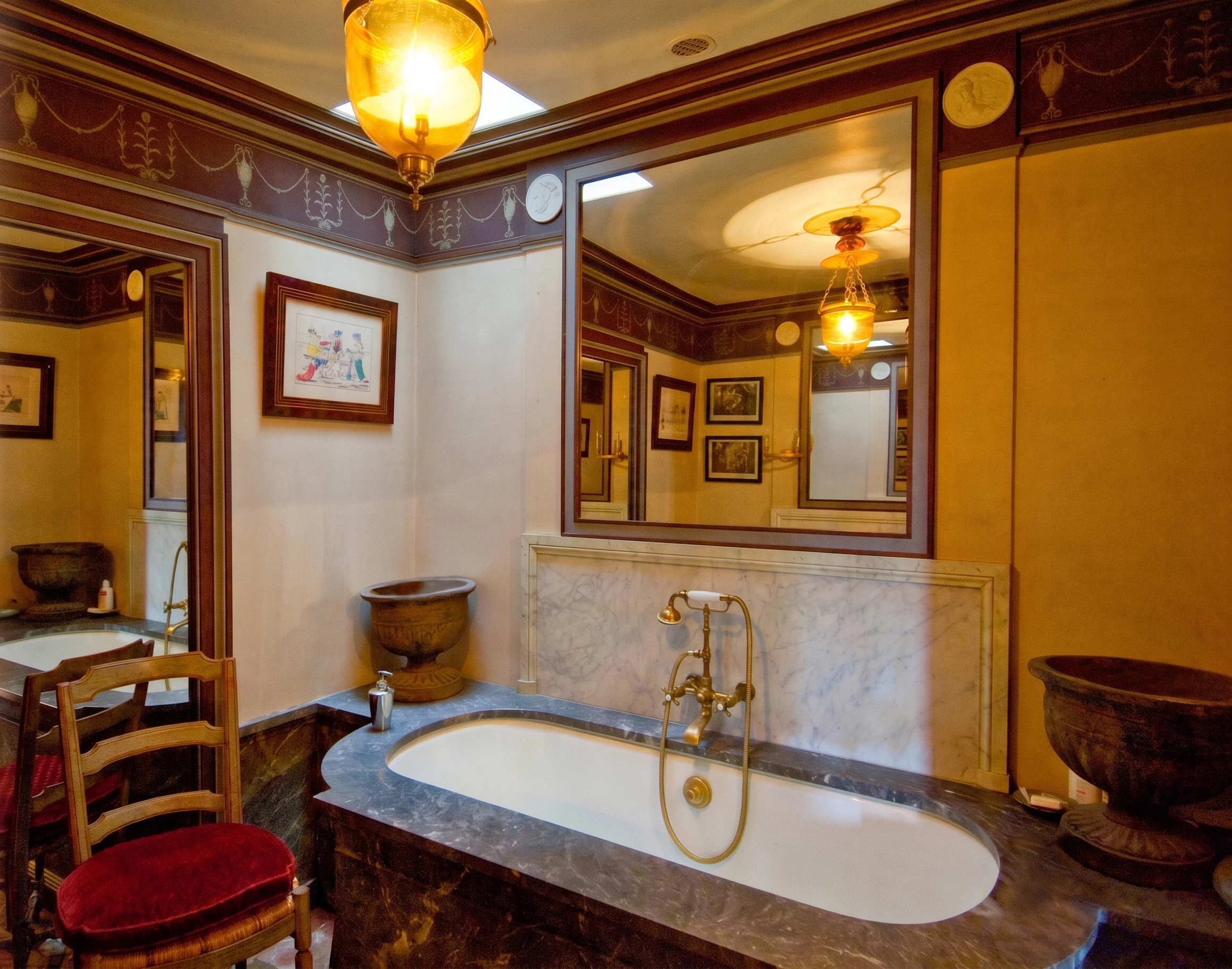
Philippe had also defined a remarkably simple brief. Above all, he required a large room in which to host his dinners, together with a kitchen conceived as it would have been in the eighteenth century(2). He soon realised that, if the principal rooms were to appear truly authentic, the service rooms(3) — the unseen spaces that supported everyday life — had to be equally convincing. Hence the central importance of the kitchen within the apartment: far more than merely a place for preparing meals, it became a place of passage and encounter.
We therefore chose to create the setting of an apartment dating from the very end of the eighteenth century, or perhaps the beginning of the nineteenth, imagining the story of an aristocrat ruined by the French Revolution who had settled in Paris, bringing with him family furniture accumulated over several generations. This historical premise also enabled us to include a kitchen within the apartment itself(4).
Gradually, this fictional premise became increasingly compelling, and we immersed ourselves in the imagined history it suggested. It provided the narrative framework that guided every aspect of the design. It justified, for example, the inclusion in the kitchen of a raised-hearth fireplace — an arrangement that would not have existed before the closing years of the eighteenth century — or the use of deliberately simplified joinery mouldings, characteristic of a period when economy had become an aesthetic necessity. This approach was all the more appropriate given that the apartment occupied the attic storey of the building.
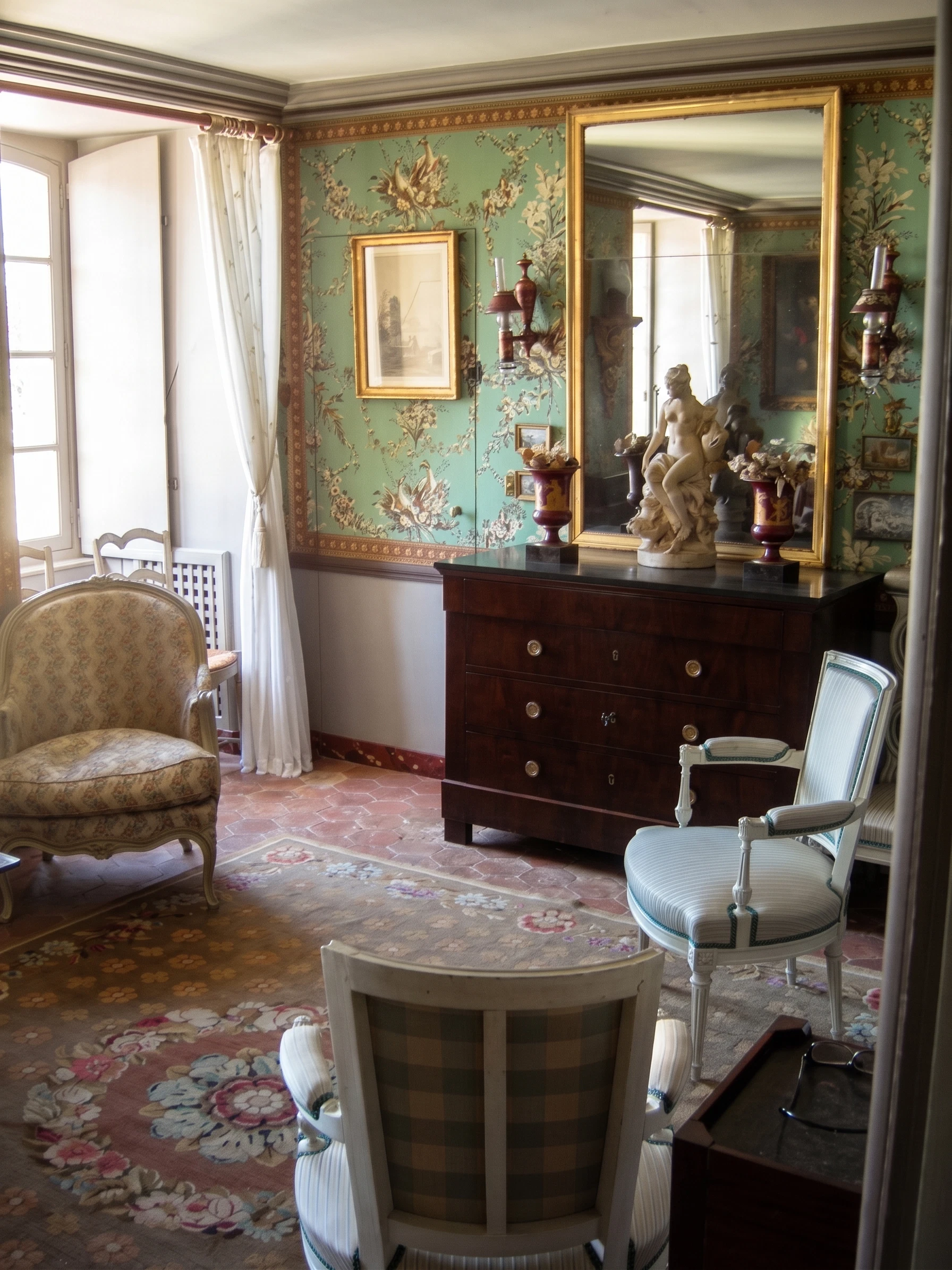
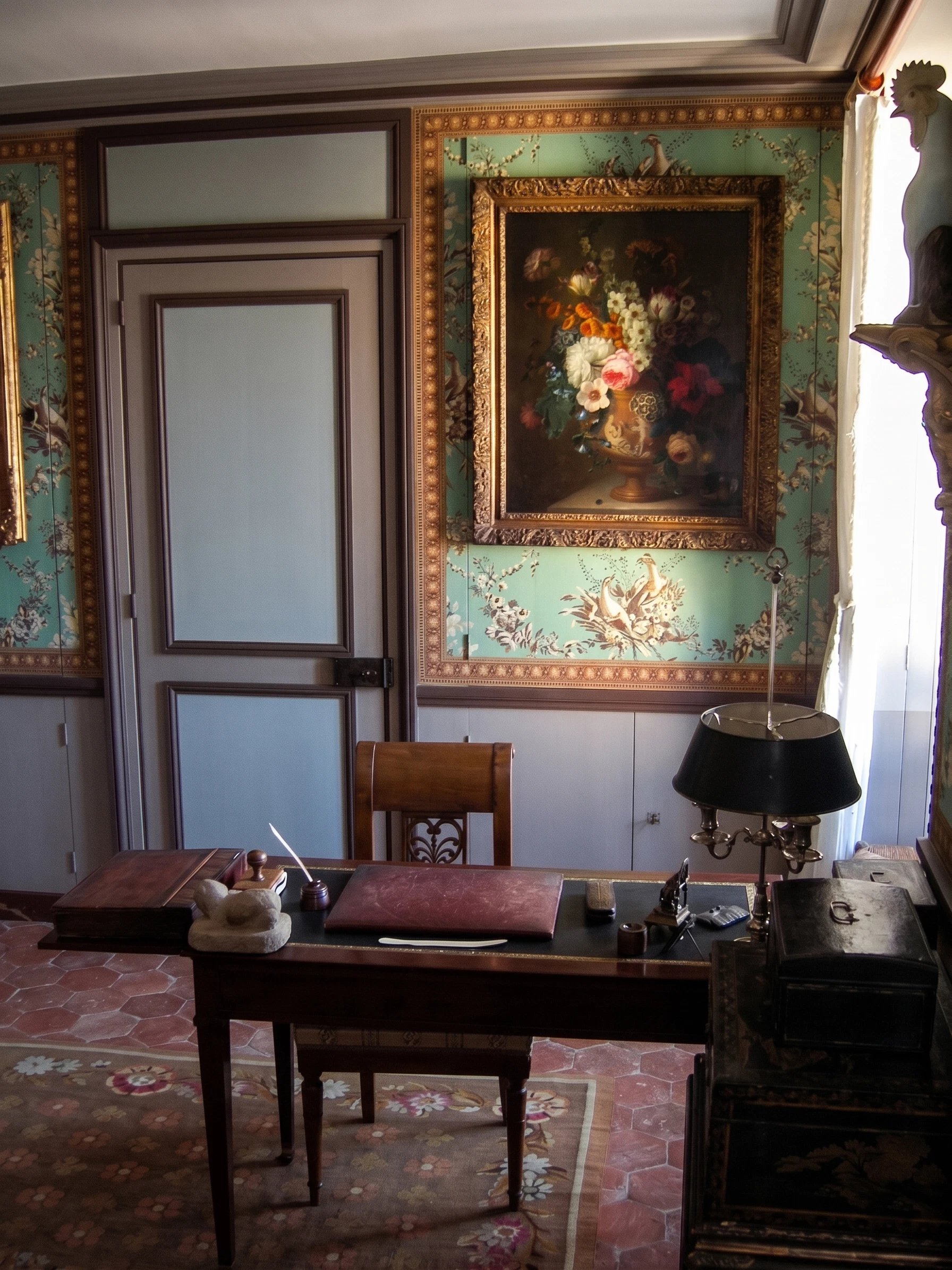
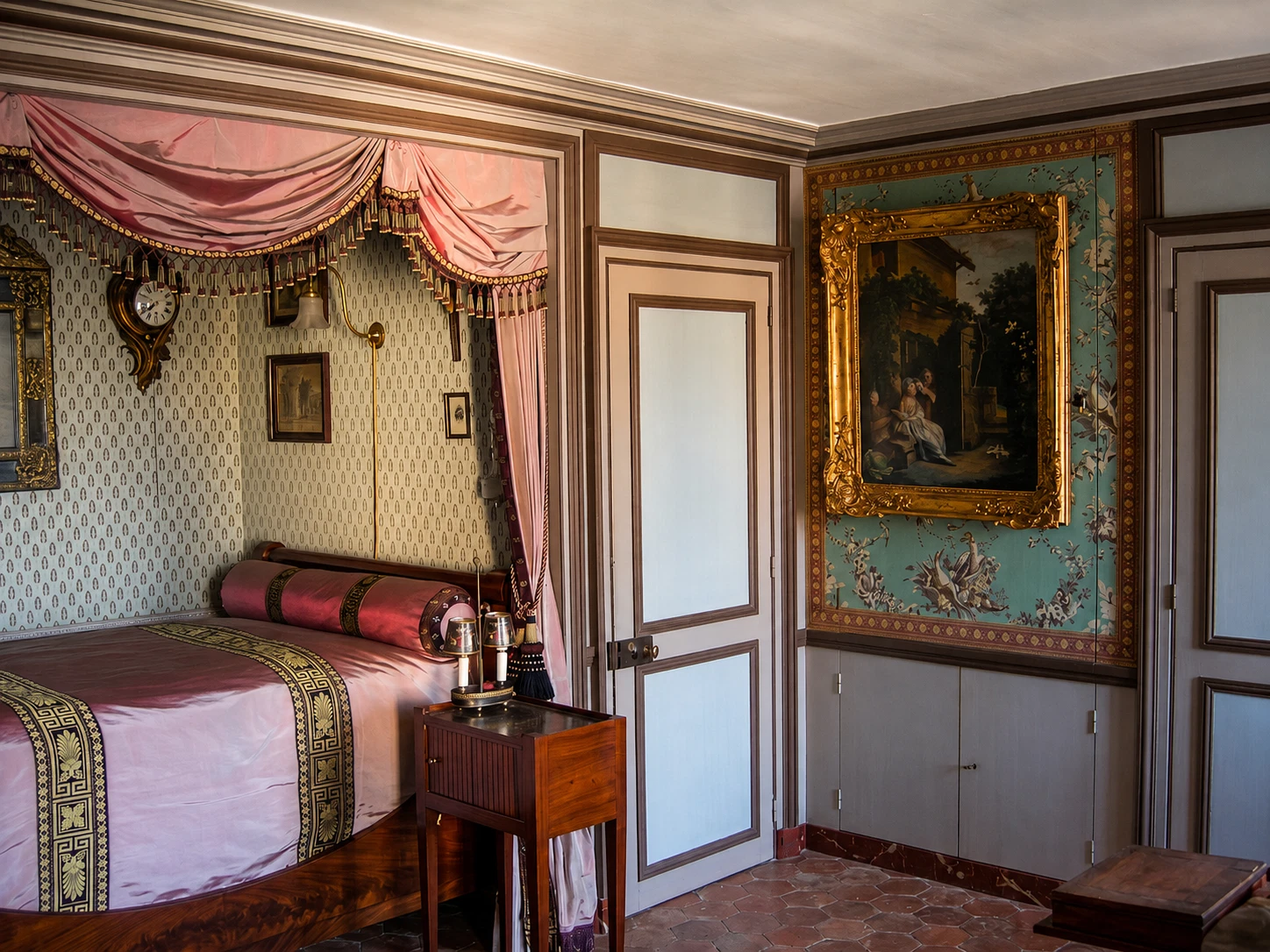
The dwelling also needed to appear as though it had been conceived by its owner rather than by a professional architect or decorator. This allowed for a more eclectic selection of furniture and decorative objects. Rather than conforming to the exact fashion of a single period, the interior naturally acquired a certain timelessness, resembling the home of a private individual as it might genuinely have been understood at the beginning of the nineteenth century.
We also chose to situate the apartment within a period when the spirit of bienséance(5) still prevailed — or at least remained the guiding principle for any honnête homme(6). This accounts for the restrained character of the decoration, a simplicity further dictated by the relatively modest ceiling heights. The floors were laid with terracotta tiles, as was common in attic apartments, while wallpaper was used wherever the space permitted, providing an elegant decorative treatment at comparatively little expense.
In the same spirit of understated elegance, and taking into account the existing volumes, which could not be altered, we transformed the largest room of the apartment — preceded only by a modest entrance hall — into a spacious principal room that serves simultaneously as the heart of the dwelling, a reception room and a circulation space. In doing so, we drew inspiration from Madame de Sévigné's description of the Château de Grignan(7) after alterations had introduced an entrance hall and vestibule: The vestibule is beautiful, and one may dine there in perfect comfort.
It is therefore in this room that the table is laid. Dedicated dining rooms were by no means commonplace, particularly in what would have been described as bourgeois apartments, and the practice of using a single reception room for dining had long remained the norm in households of modest means.
The arrangement of the reception table was conceived as a natural extension of its architectural setting and was intended to exist in complete harmony with it.
The Collection within the Apartment
The I. family's passion for the art of the table found its natural place within this wider programme. The same harmony that united the room and its decoration was to be reflected in every element of the table setting, whatever its purpose or material: ceramics, glassware, silverware and household linen all participate in the same visual dialogue.
Lighting formed the indispensable complement to this ensemble. In order to recreate the subdued atmosphere produced by candlelight and oil lamps at the turn of the nineteenth century, electricity has been introduced only as a discreet auxiliary source. It provides no more illumination than the original lighting would have done, making it necessary to light the table candlesticks before guests can fully appreciate the porcelain, glassware and linen. The result is a luminous environment in which the light gently caresses the objects, softly brushes across the faces of the guests and envelops the room in a uniform, intimate glow.
Antique objects, removed from their context or accumulated without purpose, cannot convey the same spirit as when they are employed according to their original function. Philippe and his wife's true gift lies in the discernment with which each object has been selected and placed upon the table, and in the overall authenticity of the experience, extending to the smallest details: the dishes served, the drinks offered, the vessels in which they are presented, from the serving platters to the wine bottles into which the host decants his wines.
The individual place setting(8), conceived as though it had come from a more distinguished environment — that of the country house originally belonging to our imagined proprietor — is deliberately more elaborate than the apartment itself. This subtle contrast evokes the grand table services traditionally employed when entertaining people of rank(9).
It is also one of the reasons why being received in the home of the I. family feels so entirely natural. Nothing appears calculated; everything seems simply to have found its place over the course of a lifetime, within an interior scarcely altered by the passing centuries yet continuously cared for — without the dusty character of an abandoned house, and equally without the codified good taste of a museum. Indeed, this impression is entirely genuine.
What one experiences within the apartment — its refinement, its remarkable sense of completeness — requires more than historical knowledge; above all, it demands sensitivity. Michel Pinet's entire approach was founded upon the innate sensibility of the owners themselves and upon a creative process that evolved in parallel with both the apartment and the collection. Every element of the table, responding to the wider decorative scheme, has been placed with deliberate purpose, the hosts existing in complete harmony with both their surroundings and their manner of receiving guests.
Everything here is an act of creation rather than reconstruction. Every decision springs from an intimate understanding of the chosen way of life.
The undertaking has succeeded. Those privileged enough to cross the threshold immediately feel themselves to belong to another age.
Notes
(1) Grand couvert. In this context, grand couvert is not used in its strict historical sense, in which the term referred to the public meals of reigning sovereigns, but rather to denote a formal ceremonial dinner.
(2) An eighteenth-century kitchen, such as that created by the I. family, contains no modern cooking equipment: there is neither oven nor cooking hob, and, naturally, no fitted kitchen furniture. Its organisation revolves entirely around its essential focal point — the hearth.
(3) Domestic rooms. These are the service rooms in which domestic servants carried out their daily work, together with the spaces devoted to ordinary household functions and practical uses, such as the kitchen, pantry and other utility rooms.
(4) Until the end of the eighteenth century, in many Parisian apartment buildings — and in some more modest houses even into the following century — a single communal kitchen, where one existed, served all the occupants of the building. It was generally located on the ground floor or on the mezzanine level.
(5) The spirit of bienséance. Bienséance embodied what has often been described as the French spirit: the pursuit of harmony between architectural proportions and the intended function of each room, together with respect for the hierarchy of artistic genres, distinguishing between noble and ordinary forms. These principles of good taste, which emerged during the seventeenth century alongside French Classicism, endured throughout the eighteenth century, although they gradually became diluted, eventually losing much of their original meaning during the nineteenth century.
(6) The honnête homme. As understood in the seventeenth century, the honnête homme was a cultivated individual whose learning was tempered by modesty and free from pedantry. His social qualities made him agreeable company. A man of the world, he was expected to remain courteous and humble while adapting naturally to those around him. He rejected excess, mastered his emotions and, above all, knew how to conduct himself appropriately in society. This ideal of balance, moderation and self-command has long been regarded by foreigners as one of the defining characteristics of the French character. The ideals of the French Revolution were themselves rooted in this conception of the virtuous and deserving individual.
(7) Letter from Madame de Sévigné to Monsieur de Coulanges, 9 September 1694.
(8) Place setting (couvert). Here, the singular French word couvert is used in its original sense to designate the complete place setting prepared for each guest: cutlery, glasses, plates and all other items placed at the diner's disposal.
(9) People of rank (gens de condition). Under the Ancien Régime, when used without any qualifying adjective, this expression referred primarily to the nobility. From the middle of the eighteenth century onwards, it was increasingly applied to the upper bourgeoisie. Following the French Revolution, however, the expression gradually acquired pejorative overtones and eventually fell into disuse.